
Which Issues are Issues of the Conscience?
In Romans 14 Paul tells us to honour the weaker brother. But what is a weaker brother issue, and when do
In my previous article, I tried to answer the question of whether or not there is such a thing as a ‘grey issue.’ We saw that God’s laws are always objective, but that Paul also tells us that when it comes to issues of the conscience, to put the issue aside for the sake of unity and for the weaker brother (Rom 14, 1 Cor 8).
When it comes to more serious issues, there are more serious measures. Putting someone out of the church, is, at times, instructed. Jesus tells us to treat unrepentant sinners as outsiders in Matthew 18:17, and Paul implements this multiple times (1 Cor 5:1-13, Titus 3:10, etc.).
So understanding the difference between what is a “grey issue” - an issue of the conscience - and what is a sin issue - something with significant consequences - matters a lot. The distinction is often blurred. And when it gets too blurry, you can end up with something like this:
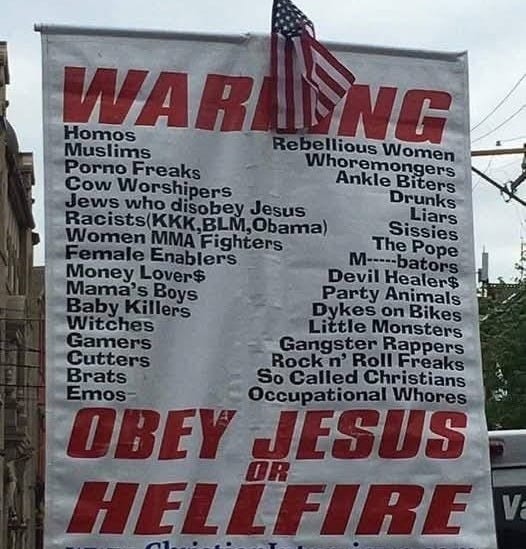
The gentleman who made this1 sees all issues as black and white. As a result, things that should be grey, like being a mama’s boy or a gamer, is now worthy of hell. There’s no room for discernment, no call for wisdom, no understanding of enduring for the sake of the weaker brother. Just straight into “ankle biters need to be warned.”
Sin does matter. It needs to be taken seriously. So how do I discern what is an issue of conscience and what is something more serious?
And more importantly, if someone is doing something that I think is sinful, but isn’t named outright in the Bible, how do I approach this?
In this article I will argue that issues exist on (at least) three levels: issues of the conscience, issues of the church, and issues of the gospel. After we go through all three, I’ll try to give a practical guide for approaching others.
What are Issues of Conscience?
In Romans 14, Paul names 3 specific issues that may bother someone who is “weak in faith” (14:1). These are:
Things someone eats.
He says, “One person believes he may eat anything, while the weak person eats only vegetables” (Romans 14:2). You can imagine how a church filled with both Jews and Gentiles would have disagreements over food. Some are avoiding pork because the Torah told them to. Some are avoiding all meat because they associate it with their past idol worship. These issues still exist! There are still people in the modern evangelical church who are holding Torah food laws. Paul calls issues of food an issue of conscience.
Holidays someone celebrates
Paul says, “One person esteems one day as better than another, while another esteems all days alike. Each one should be fully convinced in his own mind” (Rom 14:5). Again, imagine his early audience: a mix of Gentile and Jewish believers, all newly discovering Christianity. The Jews want to keep the Festival of Booths. Some of the Gentiles want to keep Roman holidays. The Jews may say to the Gentiles that they ought to leave their cultural festivals behind if they are to come to Christ. The Gentiles reply back with exactly the same line. This also, is still an issue! Good luck getting through Valentines, Halloween or even Christmas without hearing talk about the “origin” of these celebrations and why they are tainted for Christians. Christians today can’t agree on holidays either!
What someone considers clean or unclean.
“I know and am persuaded in the Lord Jesus that nothing is unclean in itself, but it is unclean for anyone who thinks it unclean” (Romans 14:14). Paul says that anything someone considers to be unclean, is unclean for them. What does this mean? It means that different will express their love and devotion to God differently - just as loving husbands may express love to their wives differently. See last week’s article for more.
These three issues: food, holidays and personal choice in holiness continue to dominate much of the discussion and disagreement in churches today. Christians still have strong opinions on how much of the Old Testament we are to be keeping. Christians still have strong opinions on what holidays we are to be celebrating. Christians make personal holiness choices all the time, and they are aghast when others do not make the same ones. Christians leave behind old, sinful habits, and then can’t figure out why other Christians still keep the same habits.
These are issues of conscience. These are things that we can refer to as ‘grey areas.’ In my first article I talked about how both legalism and relativism are equal dangers when it comes to grey areas. They are real. They aren’t salvific.
Paul says, “ if your brother is grieved by what you eat, you are no longer walking in love” (Rom 14:15). In other words, if you are doing something that upsets another Christian (in a grey area), you should stop doing it in front of them. You love people well by avoiding around them the things they are against. It’s not worth destroying what God is doing in a church because you disagree about what to do on Halloween, or if it is ethical to eat beef. Honour other people’s consciences and strive for unity. Churches are diverse, and differences create strength.
Issues pertaining to food, holidays and what someone considers unclean aren’t issues of sin, per se. But it also isn’t legalistic to have high standards around these areas. Paul says to listen to your conscience. Sometimes people are prone to do things they ought not to do because they know other Christians are okay with it, and they violate their conscience. This is sin. Others are quick to judge those with high standards. “Don’t you know we aren’t saved by works?” they ask. Paul says to listen to your conscience, and honour the weaker brother.
Issues of the Church
Issues of the church are issues are issues that affect the function and worship of a church. Issues of the church are theological opinions that are held so tightly, that for two people to worship together would violate one or both of their consciences. Both disagreeing persons are saved - and will recognize each other as such - but disagree on a functional choice within the church strongly enough to warrant independent worship. Issues of the church are theological, ecclesiological, and usually pertain to either sacraments or polity.
The most common example of this would be baptism. Imagine a church where two people who hold sincerely to two opposite views on baptism try to attend. One has been baptized by sprinkling, the other by immersion, and both believe this is the only acceptable way. One would start serving, and the other would whisper to those around them, “hey, that guy shouldn’t be serving! He hasn’t been baptized - at least not legitimately - yet.” And then a few minutes later that same man was serving and the man he just criticized would turn to those around him and say, “hey! That guy shouldn’t be serving…” and repeat the same spiel.
Issues of the church affect how a church should run. They are not salvation issues. No one is arguing that either man is unsaved, and no one is arguing that either man is living in sin and must face consequences. But these two men are struggling to hold their theological convictions and live them out while worshipping together.
It is possible to have a church that believes only baptism by sprinkling is legitimate. It is possible to have a church that believes only baptism by immersion is legitimate. It is even possible to have a church that believes that either sprinkling or immersion are legitimate. But once someone who believes sprinkling is illegitimate starts attending either of the other two churches, they will see people they believe have been illegitimately baptized, they will want to say something, and it will end up causing all kinds of discord.
This why elders are told to “exercise oversight” and “be examples” while the church is told to “be subject to the elders” (1 Peter 5:2, 3, 5). Ecclesiology needs to be solved top-down. If there are two men in the church both whispering, “hey! That guy shouldn’t be serving…” they need to seek clarity from the elders. The elders will tell them what the church’s view on baptism and service is, and the men both need to be subject to that leadership. If one finds subjection to be a true violation of their conscience, they can seek out a church that practices baptism the way they would like.
Jeremiah Burroughs (1599-1646) had a vision for denominations. His vision was one where each denomination practiced their theology well, and worshipped completely independent from each other. Despite individual worship, denominations would maintain good “fraternity.” This meant letting their pastors have a brotherhood, in which they would meet and discuss theology occasionally in order to hold each other accountable. The pastor that wanted more singing and less preaching would hang out with the pastor that wanted more preaching and less singing, and they would talk. This discussion would essentially keep either of them from saying “all preaching and no singing” or vice verse.2
Burroughs’ vision for denominations has been a recognized model for hundreds of years, perhaps more than people realize (I suspect most people don’t know how often their pastor hangs out with other pastors). In the past ten years or so, some of these fraternal links have been fracturing. Why? While issues of difference used to separate churches, increasingly there are sin issues.
The temptation is either to:
a) Try to make every issue of the conscience an issue of the church, and declare that it is impossible to worship with someone who disagrees with them on one of the 3 issues listed above. This is, at least in part, the reason why Canada has 340+ denominations.
b) Try to downplay the significance of issues of the church, as though they weren’t real or serious. I expect to spend eternity with some godly believers who are currently in other denominations that, I believe, are dead wrong on certain issues. We can all ask the Lord together someday. It is a good and valuable thing that they have churches of their own who worship and practice in a way that makes sense to them.3 As such, churches and denominations taking a stand on individual theological issues that may not be gospel issues.
Issues of the church are different than issues of the conscience because the instruction to “bear with the weaker brother” can’t be applied. Someone can’t just silently practice differently without denying the authority of the elders.
Issues of Sin
Some things are not issues of the conscience (grey areas) and they are not issues of the church (denominational preferences). Some things are clear violations of the Scripture.
What to do with issues of sin is spelled out clearly in Matthew 18:15-20. But because these consequences end with such severity, it’s important not just to know what to do with issues of sin, but what actually qualifies as an issue of sin.
The best way to know if something is sin is to see if the Bible forbids it explicitly. Find every bible verse pertaining to a subject. An index is helpful here, or, honestly, Google. See if a Bible verse specifically forbids the issue you see another Christian practicing.
The trouble with this method, however, is twofold:
First of all, this leads to cherry picking verses out of context, especially from the Old Testament law. For example, “don’t get a tattoo” in Leviticus 19:28 has to be understood in the midst of a much larger conversation regarding how much of Leviticus a Christ follower is to obey today.
Secondly, the Bible is not an exhaustive ethical guide for life. There are lots of things that are wrong that are never explicitly named in the Bible, such as animal abuse. The Bible regularly calls for wisdom and discernment, which specifically cues us to the fact that it does not intend to be exhaustive.
Despite these two drawbacks, looking for specific and relevant Bible verses is still the best method for discerning areas of sin. The second best method is to begin the process of dealing with sin detailed in Matthew 18. It starts with, “go and tell him his fault, between you and him alone. If he listens to you, you have gained your brother” (Matt 18:15). Meeting with someone alone to discuss an issue you are concerned about is a great way to begin to determine if something is an issue of conscience or an issue of sin. If you don’t know, approach the other humbly, ask lots of questions, express your concerns and see how they respond. Whether he listens to you, or you listen to him, either way you’ll both gain a brother (or sister).
The To-Do-Guide
Let’s break this down into practical guidelines.
What do I do if I disagree with someone in my church on a matter of conscience? For example, they are celebrating a holiday that I think is not appropriate for Christians? You should read Romans 14. It will tell you to maintain unity, to honour both your conscience and your Christian brother’s. Depending on the issue, it could be appropriate either to have a conversation with the other Christian, or to keep silent and move along.
What do I do if I have a disagreement over an issue of the church? If you read 1 Peter 5, you will see that the Bible says to submit to your elders (and that hopefully they aren’t lording the issue over anyone). If you believe there is a matter of worship or church organization that they have interpreted incorrectly, you don’t need to speak ill of them, and you should not try to change anyone’s mind. That church is submitting to those elders. If it really bothers you, find a different church. Many denominations will work with you to plant a new church in your area if you contact them willing to help. If you think there is no other church in your area with preaching, programming, singing, and a handful of theological issues that you like, this is probably a Goldilocks issue and not a theological issue.
What do if I see a sin issue in someone? If the person is not a Christian, you don’t do anything. Non-Christians need the gospel, not direction on how to follow some laws. If it is a Christian, follow the steps in Matthew 18:15-20. You should be quite certain this is an issue of sin, and not one of the previous two issues, before advancing.
His name is Aden Rusfeldt, if you really care, but I’m not really bothered to give him any more airtime than he gets already. I cropped their website out of the photo as well. If you want my advice, just don’t engage.
There is a chapter on this in 10 Great Ideas From Church History, by Mark Shaw. I recommend it.
Do I advocate for people to change churches? On issues of theology, where another congregation lines up with your conscience and convictions, sure. When you just “like the preaching" and singing” at another church, absolutely not. %99 of people who swap churches are for the latter reason.
Thank you for your deep thought and labour for Christian unity Kevin. We need all the voices we can get to push back against divisiveness!
This was great! Very helpful distinctions with clear paths forward. Thanks for distilling it in such a clear way.